Have you noticed that your jaw feels sore or stiff recently, especially first thing when you wake up in the morning? If so, you might have developed a TMJ (temporomandibular joint) disorder.
This condition occurs when the two joints that anchor the jawbone to the skull become overworked or misaligned, triggering painful inflammation that often requires treatment. You can potentially reduce symptoms by quitting habits known to contribute to the underlying issue. Continue reading to learn more about 3 things not to do if you’ve developed a TMJ problem!
Habit #1: Frequently Chewing Gum
Many people chew gum to freshen their breath or push off hunger pains. However, overindulging in this habit, especially if you chew more on one side of your mouth than the other, can misalign or overwork your jaw joints, causing soreness, stiffness, or swelling.
If you’re struggling to quit because of an oral fixation, you might try limiting your gum-chewing to certain times, such as following meals. You might also consider alternatives, such as sipping water or using sugar-free breath mints to prevent halitosis, or chronic bad breath.
Habit #2: Biting Your Fingernails
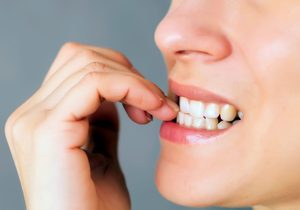
Many people subconsciously nibble their fingernails, especially during times of heightened stress or anxiety. You might not think this is harmful, but biting fingernails forces your jaw into an unnatural position that puts added pressure on the joints holding it in place. Unfortunately, the more you engage in this habit, the worse your dental condition becomes.
You can break the cycle by trimming your nails more consistently with appropriate instruments, like a pair of nail clippers or by filing them down. You might also consider using bitter-tasting nail polish (which can be clear) as a deterrent the next time you put your fingertips in your mouth.
Habit #3: Grinding Your Teeth at Night
Bruxism, or teeth grinding, is another bad habit that can significantly increase the risk of developing a TMJ disorder. However, many people who clench their arches together do so subconsciously during the day or while they’re asleep at night, which can be challenging to manage.
Fortunately, many dentists provide custom-fitted nightguards, which are protective oral appliances that are usually worn overnight to cushion your enamel and help alleviate extra tension on the jaw joints so they can rest and recover.
If you’re still struggling with TMJ symptoms, schedule an appointment with your dentist for an assessment and treatment plan to alleviate aches, reduce symptoms, and improve your mouth’s mobility.
About the Practice
Patients at Lineberry Dental of Cocoa Beach benefit from two dentists who are passionate about improving their lives by addressing their dental concerns. Dr. Lineberry and Dr. Nawrocki collaborate to deliver a comprehensive menu of services, including TMJ treatment options, using advanced technology for more comfortable, accurate outcomes meant to last. If your jaw hurts and you need help, you can request an appointment on the website or by calling (321) 783-7514.